Loodusemees.ee image bank Loodusemees.ee - the day in pictures

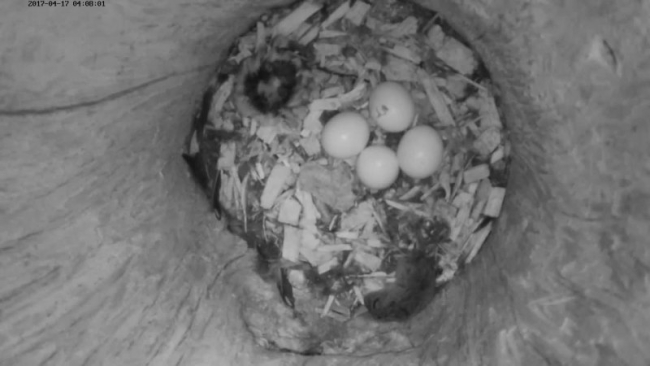
First owlet hatched on Monday

Image from webcam by Maggy, LK forum

From the egg with ”holes”in it sounds could be heard late in the evening


Tawny owl     Kodukakk       Strix aluco


So owl mother Klaara laid her eggs in the nest trunk on March 15, 18, 21 and 24. This  is how larger birds particularly birds of prey do,  because the development of larger eggs is an energy-intense activity.

Counting geese in large flocks

Text and photos Margus Ots
Translation Liis

Counting geese on the ground in fields is easier than counting flying birds – they will not at once disappear from your field of view. But at the same time the geese in a large flock on the ground may be behind each other and the birds farther away may stay unnoticed. Often the geese in a field seem like a narrow band but on seeing the flock from another side it turns out that the goose flock covers a much greater area than supposed, the flock is as long as it is broad and at least half the birds were not noticed at all.

Tens of thousands of geese now staying in Estonian fields and polders

Photos and text Margus Ots
Translation Liis

From the wintering areas in western Europe the first flocks, mainly consisting of greater white-fronted geese and bean geese reached Estonia already in March. The geese, heading for their breeding areas in the tundras of Russia, stay in Estonia at most until the end of April-beginning of May; in mid-May they already leave for the breeding grounds. In the second half of May only a few left behind can be seen.

The geese stay in particularly great numbers around Tartu, where nearly 25 000 geese are spending the night at the Aardla lake. Of those more than 85% are greater white-fronted geese, the remainder mainly bean geese.

Butterfly game – white and yellow

Text and photos Urmas Tartes
Translation Liis

Two male brimstone butterflies chasing one female


Brimstone        Lapsuliblikas        Gonepteryx rhamni


In spring we can see yellow as well as white butterflies flying. Despite the seemingly great difference in colour we have to do with the same species – the brimstone butterfly.

The difference in colour is related to the sex of the butterfly – male brimstones are dark yellow, heralding a sunny and warm summer.

We use cookies on our website to support technical features that enhance your user experience.

We also use analytics & advertising services. To opt-out click for more information.