Loodusemees.ee image bank Loodusemees.ee - the day in pictures

Looduskalender in Vikerraadio: Arrowhead

The author, Kristel Vilbaste, also posts texts in Vikerraadio

Photos: Arne Ader

Translation into English by Maret

Estonian text posted 16.08.2018

Jõgi-kõõlusleht

British Native Arrowhead

I see in my child’s biology textbook a peculiar plant that I don’t remember from my childhood. British Native Arrowhead is a plant, that is used to teach heterophylly. That means that the plant has different-shaped leaves under the water than above the water.

On British Native Arrowhead, the above-water leaves do look like arrowheads, but arrowheads as big as the palm of a hand. The leaves above the water are oval and the ones under the water are long, ribbon-like. The plant grows in knee-deep water and pushes up a bit above the surface.

Looduskalender in Vikerraadio: Eurasian jay with an acorn

The author, Kristel Vilbaste, also posts texts in Vikerraadio

Photo: Arne Ader

Translation into English by Maret

Estonian text posted 15.08.2018

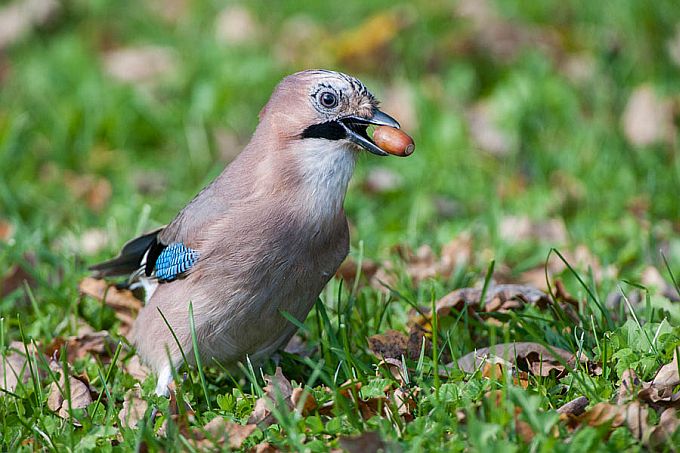
Pasknäär

Eurasian jay

Have you noticed, how many acorns we have this year? A good year for acorns was supposed to mean a winter with lots of snow.

Because of the dry weather the acorns started falling down as early as at the end of July. But you cannot carry such an acorn around in your pocket for long, as its shell has not yet hardened and will turn black very quickly, and the acorn itself will wither. It’s still too early to collect them; the same goes for hazelnuts  —  they still taste like hay right now.

Nevertheless, we have many searchers for acorns. First of all the Eurasian jays, who carry them off shouting with joy. And although the Estonian name for those jays (pasknäär) does not have a nice sound, the bird itself is very pretty.

Have all white storks already started their migration?

Photo Arne Ader

English translation Liis


Estonian text posted 06.09.2018

Valge-toonekured

White storks


White stork      Valge-toonekurg          Ciconia ciconia


A month ago the white storks were busy very visibly and diligently at road verges. The young birds had fledged.

In the beginning of September we only meet some solitary stray bird or groups of not yet breeding birds.

The white storks always leave somehow suddenly – they are busy as if there would be no hurry anywhere and one morning you suddenly notice that you haven’t seen any birds for several days...

Date to celebrate in greater spotted eagle nest

Screenshot from webcam IceAge, LK forum
English translation Liis


Estonian text posted 01.09.2018

The young  greater spotted eagle finally got the name Tõnnipoeg


Greater spotted eagle       Suur-konnakotkas         Clanga clanga


Three months have passed in a flash. In our web camera nest a handsome juvenile has grown up. There is still action near the nest but this period too will end in the next few days.

Let us see what will happen that the camera lens will no longer show.

We use cookies on our website to support technical features that enhance your user experience.

We also use analytics & advertising services. To opt-out click for more information.