Loodusemees.ee image bank Loodusemees.ee - the day in pictures

About moths – Rosy footman

Text and photos  Aare Lindtwww.loodusmuuseum.ee
Translation Liis

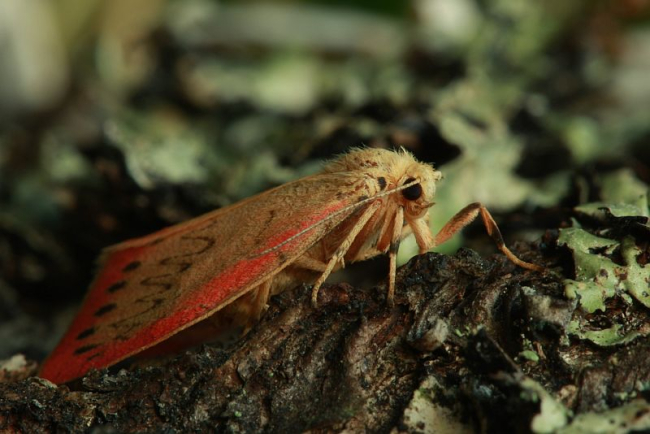
Rosy footman


Rosy footman    Roosasambliklane     Miltochrista miniata


The rosy footman occurs in the whole of Estonia and is quite common. The moths fly in mixed and conifer forests, stands of trees and gardens, from July to mid-August.

The rosy footman, quite small with a wingspan of about 26 mm, is nocturnal and often flies to artificial lights. In daytime it sleeps wherever it finds a place and does not fly up on every interruption.
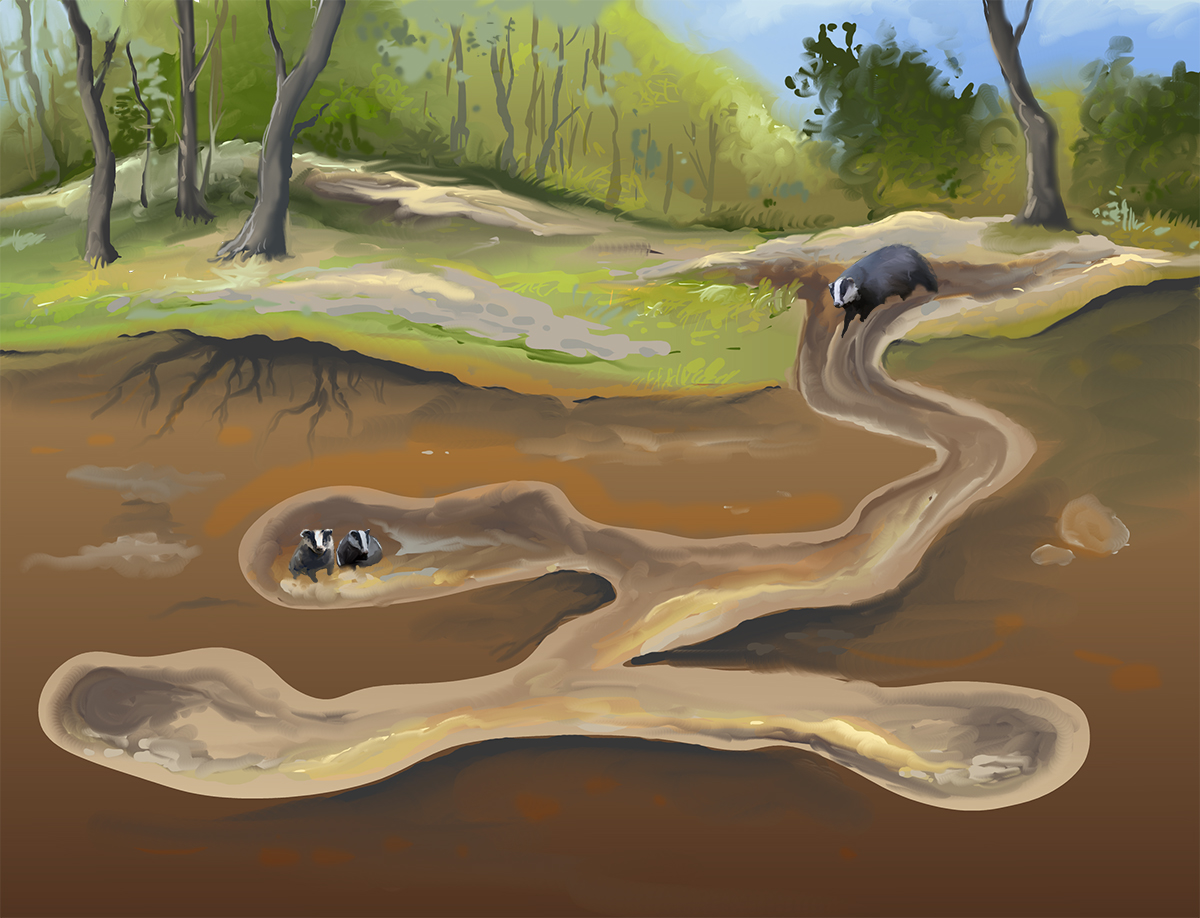
Interior of badger’s home

Sisu
mägralinnak
Multi-storey badger house on flat land. The burrows are at different levels, the nest chambers generally at a distance of 4-5 m from the entrance, the sleeping quarters however deeper to protect against winter cold.  In the simplified diagram there is only one entrance but usually the nest chamber (upper level) can be entered from two openings.
Drawing by Leo Lätti

Posted by the Animal of the Year Team
 

How the badger’s home might look below ground only the badger itself knows; hunters who have excavated badger burrows might have an idea. The latter experiences are mostly from the time when raccoon dog skins were still highly valued.


Badger nights in the webcam

Sisu

Posted by the Animal of the Year team

Tuesday night at 22:02. The badger sniffs the air carefully at the entrance before leaving, and only then chooses the path, depending on the wind direction so that smells reach its nose better. Badgers have a very good sense of smell. 
Video clip recorded by  Fleur from the badger camera forum.
 

About moths – Iron prominent

Text and photos  Aare Lindtwww.loodusmuuseum.ee
Translation Liis

Iron prominent (male specimen)


Iron prominent     Lepa-hammastutlane        Notodonta dromedarius


The iron prominent occurs in the whole of Estonia and is common. The moths can be seen in summer in forests, coppices and gardens. The ”tooth”, hammas, in the Estonian name, hammastutlane refers to the line of conical wart-like protuberances on the back of the caterpillar.

We use cookies on our website to support technical features that enhance your user experience.

We also use analytics & advertising services. To opt-out click for more information.